COVID-19 caused major economic disruptions around the world. Many companies froze hiring and paused investments. At the same time, many of them discovered their technological gaps and faced programming-related challenges, such as insecure internal software or the lack of tailored solutions.
Companies recognized the need for digitalization and automation in order to meet new challenges. As a result, the pandemic significantly accelerated digital transformation, opening the door wider to low-code and no-code technologies.
Less code, fewer problems
Rapid digital transformation is creating a huge gap between the supply and demand for software developers. Although more developers are joining the industry, it is still not enough.
That is why low-code and no-code platforms are expected to gain momentum in 2021. As many as 85% of engineers predict that these tools will soon become mainstream.
Low-code tools are designed for developers and allow them to build systems with reduced effort. No-code platforms, on the other hand, are dedicated to non-programmers. They enable business experts with minimal IT skills to independently build and manage relatively simple applications, data, and integration tasks.
Both technologies were created to simplify the delivery of technological solutions in companies. They allow organizations to deploy applications faster and automate work more efficiently.
By using these tools, companies can improve workflows and reduce workload, enabling employees to focus on more important tasks. “Low-code” and “no-code” tools lower the entry barrier thanks to visual programming interfaces and drag-and-drop tools.
No-code platforms such as Qalcwise allow any user, after short training, to create even advanced business applications. For example:
- an HR employee can build a leave request application in a few days
- an accounting employee can create an expense management application
- an administration employee can build a fleet management application
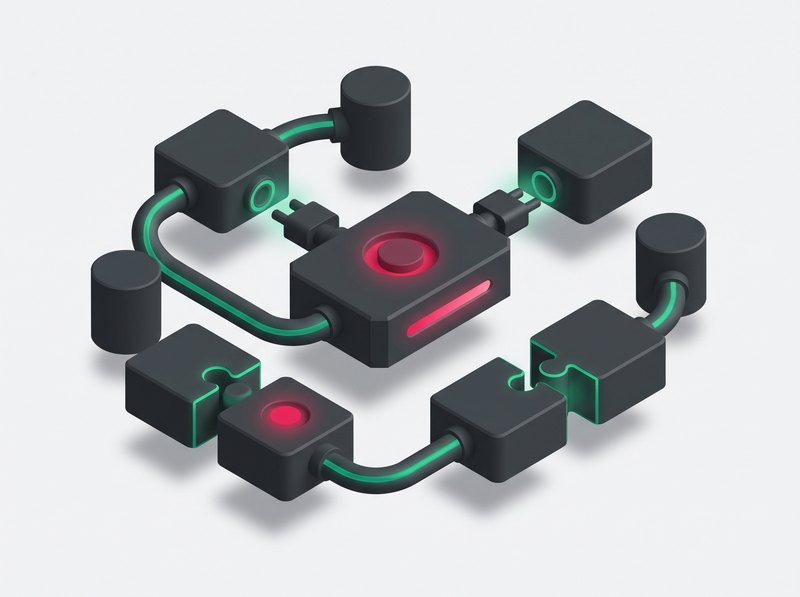
Using visual components (widgets), like LEGO bricks, users can design applications that replace Excel sheets or multiple disconnected systems.
This is how a new group of users is emerging: “citizen developers”, taking over part of IT responsibilities. The absence of coding allows non-technical employees to independently introduce innovation and develop software in weeks instead of months.
Companies prefer DIY solutions
During the Ignite 2020 conference, Satya Nadella, CEO of Microsoft, stated that companies will increasingly develop software in-house.
Ten years ago, Microsoft expected to sell solutions to companies. Today, it recognizes that it must actively participate in large-scale enterprise software creation.
Gartner predicts that within 3–5 years, up to 65% of solutions will be built inside companies using low-code and no-code platforms supported by AI bots and machine learning.
Citizen development enables faster and more tailored technological changes, increasing competitiveness and innovation. It also makes automation more democratic, creative, flexible, and ethical.
By involving business experts, organizations can better leverage internal talent and create solutions fully aligned with their needs. It also helps prepare teams for remote work during and after the pandemic, improving resilience to unexpected changes.
Sources
- Internal Survey Says No-code/Low-code Will Be IT Priority in Next Nine Months
- The Most Disruptive Trend Of 2021: No Code / Low Code
- 6 Trends on the Gartner Hype Cycle for the Digital Workplace, 2020